
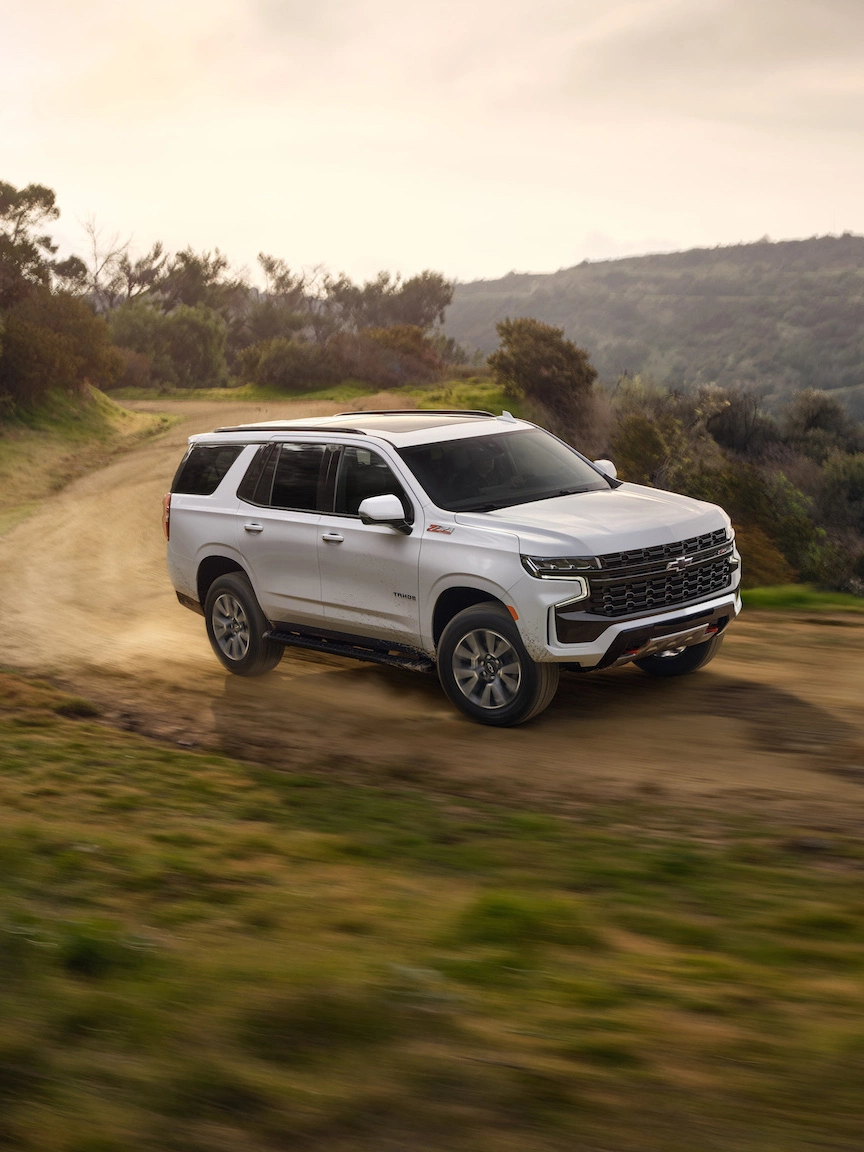
Choose the 2026 Chevrolet Tahoe for your shortlist when you want a choice of V8 or diesel power, a large configurable cabin and a trim that matches your family's daily use. The Toyota Sequoia takes a different approach with standard hybrid power. An informative comparison should make those differences clear instead of claiming either SUV wins every category.
A concrete Tahoe example is 2026 High Country stock CH476557, listed in our catalog on October 12, 2026 with a 6.2-liter V8, ten-speed automatic and 4WD. Availability changes. The photographed vehicle's options are not standard equipment across the Tahoe range.

Tahoe gives you a powertrain choice
Chevrolet's 2026 Tahoe information lists 5.3-liter and 6.2-liter V8s and an available 3.0-liter Duramax diesel, with availability varying by trim. The High Country's 6.2-liter V8 is rated at 420 horsepower and 460 lb-ft. A 17.7-inch center display is standard across the lineup.
Toyota equips the 2026 Sequoia with its i-FORCE MAX twin-turbo V6 hybrid producing 437 horsepower and 583 lb-ft. Its published output is higher than the Tahoe 6.2-liter figures above. That is a real distinction, not one this comparison should hide.
Tahoe's reason to remain in the discussion is choice: a shopper who specifically wants a V8 or diesel can evaluate those options rather than accept a single hybrid-only powertrain strategy. Engine preference still needs to fit the complete vehicle, fuel costs and ownership plan.
Test cargo with the seats you actually use
Chevrolet advertises up to 122.7 cubic feet of maximum Tahoe cargo volume. That is a seats-folded maximum, not the luggage space remaining with your family occupying every required row. Do not compare it with another SUV's third-row-up number.
Bring suitcases, a stroller or sports equipment and repeat the same loading test in both SUVs. Check the height of the cargo floor, access to the third row, the seating position behind your driver setting and what remains visible through the rear window. A useful answer is which arrangement works for your household—not which brochure contains the largest isolated number.

What this High Country adds to the discussion
CH476557's listing describes Magnetic Ride Control, heated and ventilated front seats, heated second-row outboard seats, a head-up display, power-retractable steps, Bose audio and power-folding rear seating functions. These details make it worth inspecting when passenger comfort and convenience are priorities.
Compare them with the actual Sequoia trim's equipment list. Do not compare a heavily optioned High Country with a base-price Sequoia and call the result a fair price comparison. Likewise, a trim name does not verify every driver-assistance system; ask for demonstrations and operating limitations.
Which buyer has a reason to choose Tahoe?
Tahoe makes a clear case when the V8 or diesel choice matters, its seat-and-cargo arrangement suits your household, and the chosen trim includes the convenience features you value. Sequoia deserves consideration when its standard hybrid powertrain is central to your preferences. Neither point establishes a universal reliability or resale advantage.
For towing, match the exact engine, drivetrain, trailering equipment and loaded family weight. A model-range maximum is not the rating of every stock number. For a long-distance purchase, obtain a current equipment record and written complete quote before booking travel or transport.
Is every Tahoe a V8?
No. The 2026 lineup also offers a diesel option on eligible configurations.
Does the Tahoe's maximum cargo figure describe space behind the third row?
No. It describes the maximum configuration; test the space left with your required seats occupied.
Compare the Tahoe that fits your family
Browse Tahoe inventory and used alternatives, then ask about CH476557. Our new-vehicle hub, Traverse/Tahoe family guide and captain's chairs versus bench guide cover the next decisions.
