

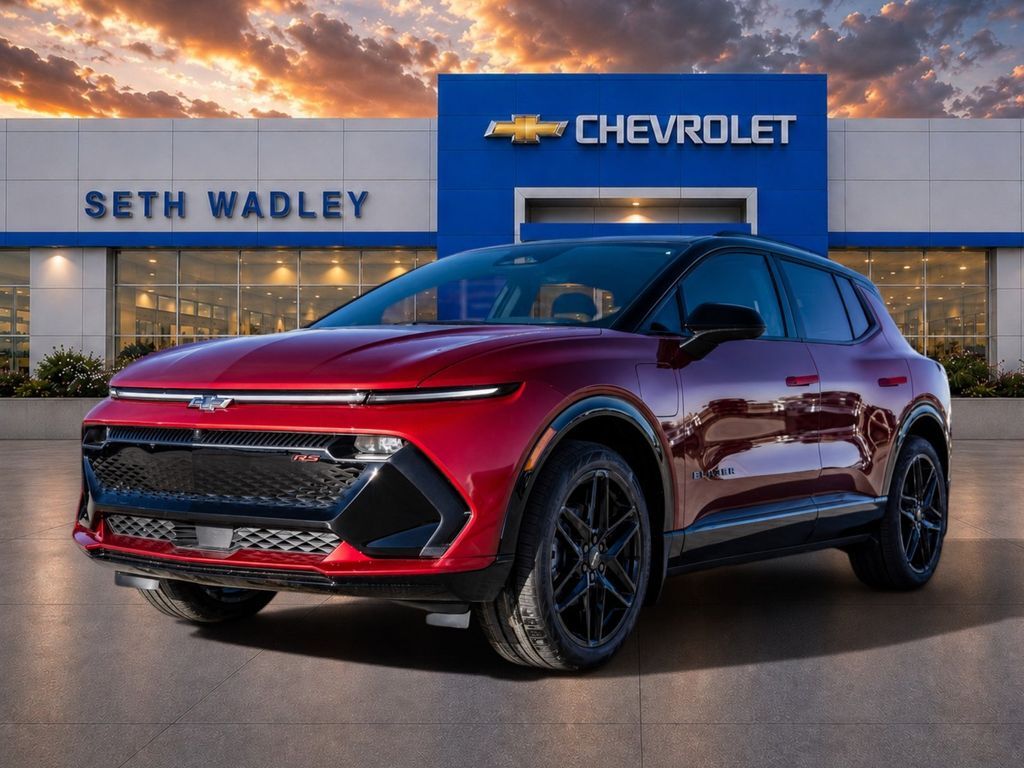
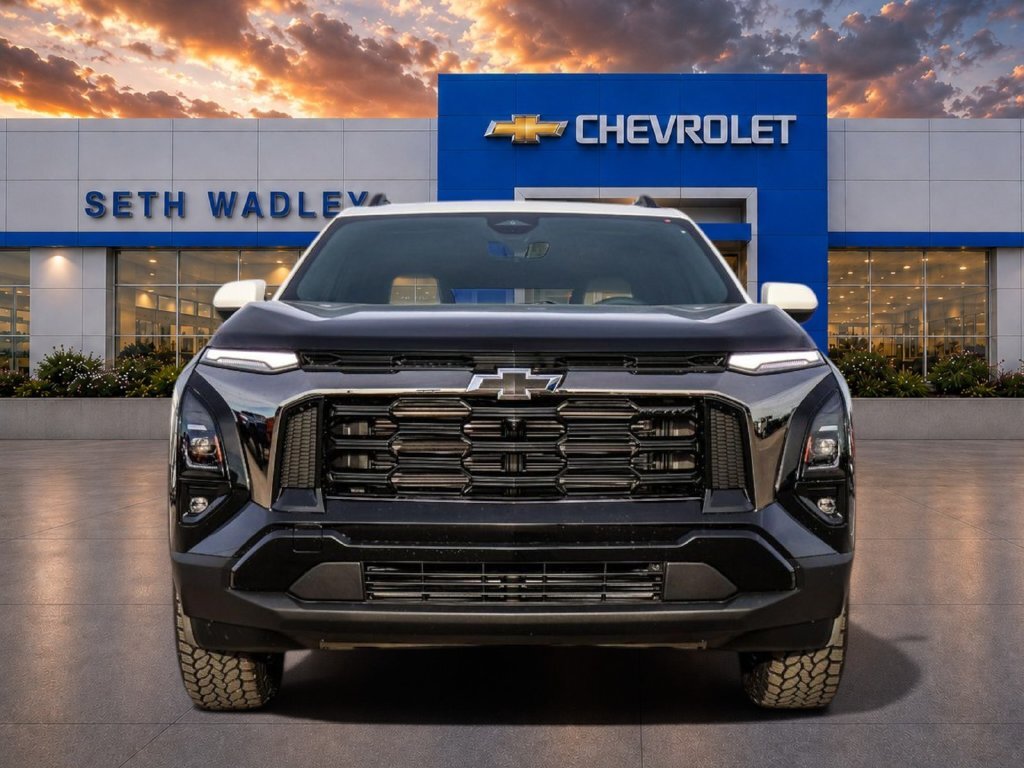
Compare an Equinox EV with a gas Equinox by separating energy cost from the rest of ownership. Electricity can cost less per mile in one routine and more in another, especially when public fast charging replaces home charging. The names also identify different vehicle products, so compare their space and equipment rather than assuming the powertrain is the only difference.
This worksheet uses illustrative assumptions, not quoted utility rates, pump prices, EPA ratings or a savings promise. Replace every input with information for the exact vehicles and your driving. The Chevrolet home-charging guide is a starting point for evaluating whether the assumed charging routine is practical.
Step 1: Use the same annual distance
For a gas vehicle, annual fuel cost equals annual miles divided by miles per gallon, multiplied by price per gallon. For an EV, annual charging cost equals annual miles multiplied by wall-energy use in kWh per mile, multiplied by the effective price per kWh. Using wall energy includes charging losses; do not add those losses again to a number that already includes them.
Our example uses 12,000 miles per year. Assume the gas vehicle averages 30 mpg and fuel costs $3.25 per gallon. The calculation is 12,000 ÷ 30 × $3.25 = $1,300 per year. These are worksheet inputs, not a claim about either inventory vehicle's real-world fuel economy.
Step 2: Price the charging you will actually use
Assume the EV needs 0.32 kWh per mile from the wall. At 12,000 miles, that is 3,840 kWh annually. If every kWh costs $0.15 at home, the energy bill is $576, or $724 below the gas example.
If 80% of the energy is charged at $0.15 and 20% at a hypothetical public rate of $0.55, the blended rate is $0.23. Annual energy cost becomes $883.20, leaving $416.80 below the gas example. If all energy instead costs $0.55, the result is $2,112, or $812 above the gas example.
Include session, parking, idle and subscription charges where applicable. Base the split on energy purchased, not just the number of charging stops. A short top-up and a large charging session are not equal shares.
Step 3: Find your energy break-even point
With these exact assumptions, $1,300 divided by 3,840 kWh is approximately $0.339 per kWh. Above that blended energy price, the EV example costs more for energy; below it, it costs less. Changing mileage efficiency, fuel price or charging consumption changes the answer.
This is an energy comparison only. It does not establish which vehicle is cheaper to own. An annual saving can be outweighed by a different purchase price, insurance premium, financing cost or charging installation.
Step 4: Add the costs people often leave out
Collect written out-the-door purchase quotes, insurance quotes for each VIN and an electrician's installation quote if needed. Add the maintenance items required by each owner's manual, tires, registration and likely ownership duration. Battery-electric vehicles do not require an engine-oil change, but they are not maintenance-free; tires and other service requirements still matter.
Compare financing using the actual APR, amount financed and term. Do not assume a lower monthly payment means a lower total cost. Treat possible tax credits or rebates as zero in the comparison until current eligibility and transaction terms are confirmed.
Step 5: Test whether the routine fits
Check your ordinary commute, occasional long days and charging access during travel. Compare cabin, cargo, visibility and preferred controls on the actual vehicles. Review the Equinox EV information and gas Equinox information against the model year being purchased.
Does this prove an EV will save me $724?
No. That result belongs only to the hypothetical all-home-charging inputs above.
What number should I use for EV consumption?
Use a properly matched, clearly defined efficiency estimate and know whether it includes charging losses. A battery display and a utility meter may measure different things.
How do I compare two actual vehicles?
Choose an EV and a gas stock number, gather the quotes and fill in your own inputs. Browse EV inventory and gas Equinox inventory, then contact Seth Wadley Chevrolet GMC. Worksheet reviewed October 10, 2026.
